

SKU:


ToneShaper
Wraparound Tailpiece, Lightning Bar, Compensated for Plain G, Zinc, Chrome
Wraparound Tailpiece, Lightning Bar, Compensated for Plain G, Zinc, Chrome
Couldn't load pickup availability
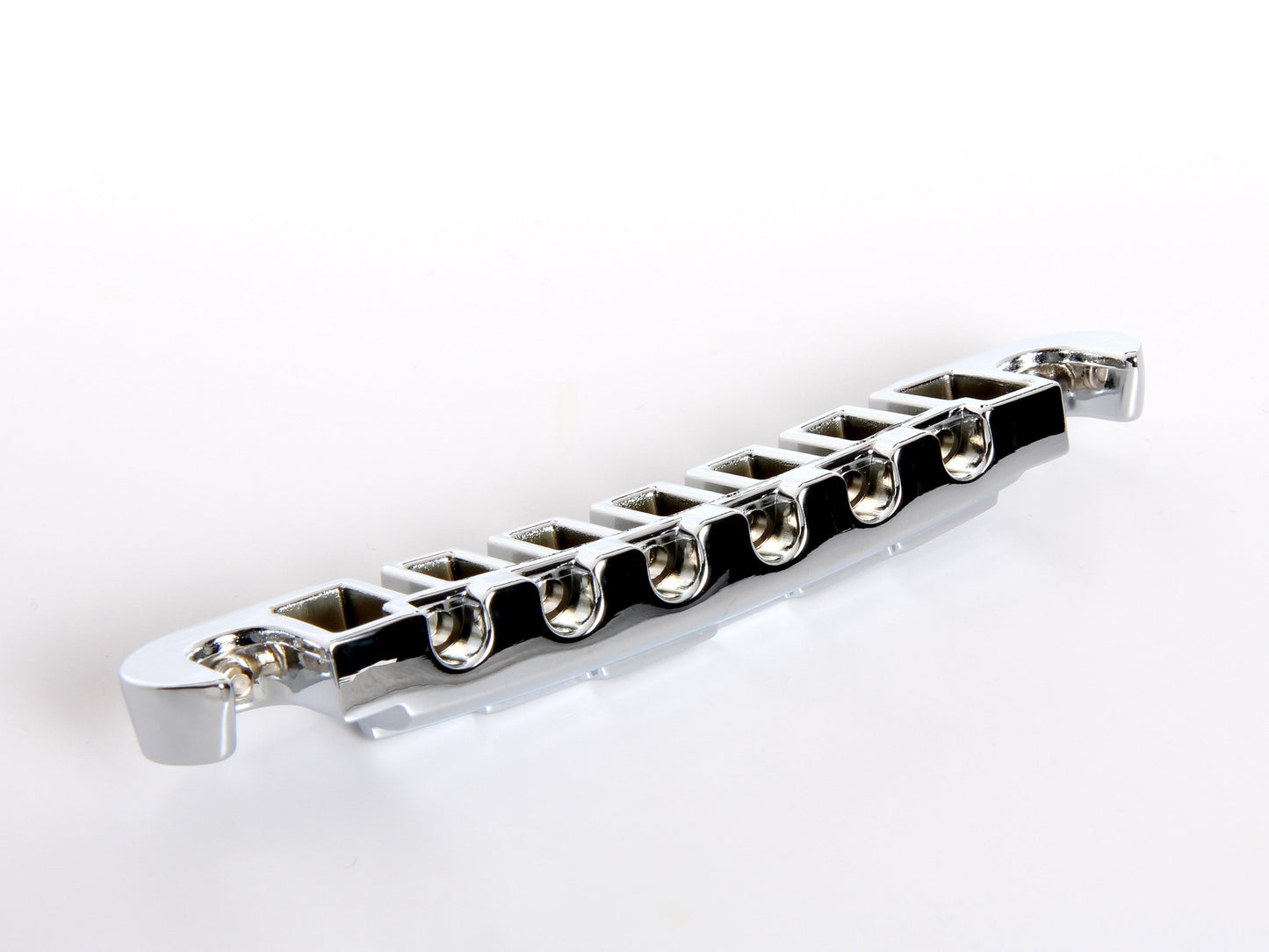
A wraparound bridge/tailpiece with the lightning bar ridge, updated from Gibson's 1962 design and compensated for a plain (unwound) G string, so it will intonate pretty doggone close™. Cast zinc, made in the USA by Gibson's supplier. Chrome plated. About 70 g.
Fits guitars built for a wraparound on standard Gibson studs.
History
Two patents, six months apart. In July 1952 Gibson applied for a patent on a new adjustable bridge, the ABR-1. Six months later, in January 1953, it applied for a patent on a "Combined Bridge and Tailpiece." This latter design would evolve into several different variants over the next ten years, to fit specific needs. These variants have been given many names since: stopbar, stoptail, wraptail, wraparound, lightning bar.
The wraparound stopbar. The bridge in that second patent originally did two jobs with a single piece: it anchored the strings, and it acted as the bridge. The strings went in through the front edge (the side facing the pickups) and wrapped over the top. There was no way to adjust the length of each individual string (intonation adjustment), which would have allowed the guitar to play in tune. But screws in the rear edge did let you angle the whole piece to approximate proper intonation.
The Les Pauls. The Les Paul Model came out in 1952 with a trapeze tailpiece, but in 1953 the new wraparound stopbar replaced that. This guitar - the Goldtop guitar known simply as the Les Paul Model, would retain this bridge for the next couple of years.
The Les Paul Custom on the other hand, which debuted for 1954, used the ABR-1 bridge in tandem with a new variation of the stopbar. Since this guitar used the ABR-1, the new stopbar's only job was to anchor the strings, it didn't need to act as a bridge. This variant became known as the stop tailpiece (stopbar tailpiece; stoptail). With this combination of stop tailpiece and ABR-1 bridge the Custom was the first Les Paul that could be properly intonated, so it played in tune.
The lowly Goldtop soldiered on with the one-piece wraparound for a while longer, so it continued to play out of tune. Someone at Gibson must have decided that playing in tune was a benefit that should be reserved only for guitars above a certain price point! Also during this time, two more Les Paul siblings arrived: the Les Paul Junior in 1954 and the Les Paul Special in 1955. Both also came with the wraparound bridge, and both kept it for years. But the Goldtop - finally, in late 1955 - got the ABR-1 and stop tailpiece. And it was happy.
The lightning bar. In 1962 Gibson redesigned the one-piece unit with a raised ridge along the top, to get closer to proper intonation. It still wasn't fully adjustable. Known as the lightning bar, it was used on the lower-priced models, such as the SG Junior and the Melody Maker, from then on. Those original lightning bars don't work properly on most guitars today: they were designed when guitars shipped with a wound G string, and most string sets now have a plain (unwound) G. So the ridge has been revised to suit modern string sets.
Details
How it mounts. The wraparound sits on two studs, like a stop tailpiece. The strings go in through the front edge (the side facing the pickups) and wrap over the top. Turn the studs to set the height.
Plain G, not wound. The ridge is shaped for modern string sets with an unwound G. The original 1960s lightning bars were shaped for a wound G, which is why they don't intonate well with most strings today.
Setting intonation. The ridge sets the length of each string relative to the others. Setscrews in the rear edge bear against the studs: adjust them to angle the whole piece, moving the bass side and treble side back or forward, to bring the intonation pretty doggone close™.
Studs not included. The tailpiece sits on a pair of studs that screw into threaded anchors in the guitar. Most guitars already have them. If you need new ones, we sell stud sets in 5/16-24 (USA guitars) and M8 (many imports).
Specs
- Wraparound bridge/tailpiece, one piece
- Lightning bar ridge, compensated for a plain (unwound) G
- Setscrews in the rear edge to adjust the angle
- Cast zinc
- Chrome plated
- Studs not included
- Dimensions: see the drawing in the images
- Weight approx. 70 g
- Made in the USA by Gibson's supplier
















maestro
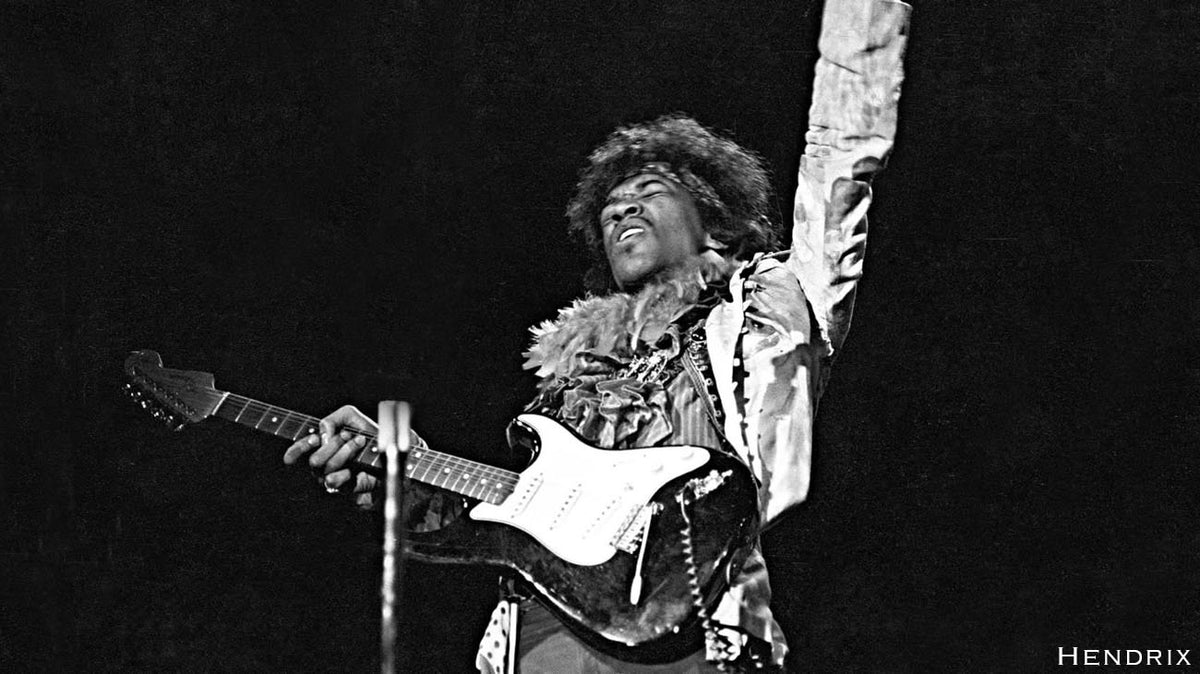
these are the players who inspire us